

Article: The History of Silk in Asia: A Fabric Woven Into Every Lunar New Year

The History of Silk in Asia: A Fabric Woven Into Every Lunar New Year
Few materials in human history carry the weight that silk does. Not just as a luxury fabric, but as a symbol of civilization, culture, and celebration. From the imperial courts of ancient China to the festive reunions of Lunar New Year today, silk has been woven into Asian identity for over 5,000 years. As we celebrate the new year, it's worth tracing how this extraordinary material came to define so much of what we cherish.
Where It All Began
The story of silk starts in Neolithic China, within the Yangshao culture of the 4th millennium BCE. According to legend, it was Empress Leizu, consort of the Yellow Emperor, who first discovered that the threads of a silkworm cocoon could be unraveled into a single, impossibly fine filament. Whether myth or history, what followed was a closely guarded national secret that would last for millennia.
For thousands of years, the art of sericulture remained exclusively Chinese. Silk cultivation eventually reached Japan by around 300 CE. It took until 552 CE for the Byzantine Empire to obtain silkworm eggs, reportedly smuggled out of China by Assyrian monks hidden inside their walking staffs. Even as the secret slowly escaped, China maintained a virtual monopoly on the highest-quality silk for centuries.
Within China, silk was never merely a fabric. It served as currency, as a medium for writing, and as a marker of social rank. During the Tang Dynasty (618 to 907 CE), the color of silk worn was a formal guide to one's place in the imperial hierarchy. Silk was, quite literally, power.
Sources: Wikipedia; Smithsonian Folklife Festival
The Silk Road
By the 2nd century BCE, silk had become China's most valuable export and the engine behind one of history's most remarkable trade networks. The Silk Road was not a single route but a sprawling web of overland and maritime paths stretching from Chang'an (modern-day Xi'an) westward through Central Asia, the Middle East, and on to the Mediterranean.
General Zhang Qian, dispatched by Han Emperor Wudi in 139 BCE on a diplomatic mission, helped establish the earliest formal routes that would connect China to Rome. Caravans of 100 to 500 people traveled for up to a year, crossing the Taklamakan Desert and the Pamir Mountains, braving bandits and brutal weather, all for the chance to trade silk and other precious goods.
The Silk Road carried far more than merchandise. Buddhism traveled these routes from India into China. Christianity and Islam spread through the same networks. And silk, rare and luminous, remained the most coveted commodity throughout, commanding prices that rivaled gold.
By the Yuan Dynasty (1271 to 1368), maritime silk routes began to replace overland ones, with ships crossing the South China Sea and the Indian Ocean to reach Arabia, East Africa, and beyond.
Sources: Smithsonian Folklife Festival; UNESCO Silk Roads Programme; Encyclopaedia Britannica; Google Arts & Culture
Silk Across Asian Cultures
As silk production spread through Korea, Japan, India, Vietnam, and beyond, each culture wove its own meaning into the material.
In Japan, silk became central to the kimono tradition, worn at weddings, coming-of-age ceremonies, and New Year celebrations. In Korea, during Seollal, gifts of money are presented in colorful silk bags called bokjumeoni, a custom that continues today. In Vietnam, the áo dài, the country's iconic silk garment, is worn during Tết as a symbol of cultural pride and renewal.
In India, silk has been interwoven with religious ritual for millennia. Banarasi silk, woven in Varanasi, remains among the most revered textiles on earth, used in weddings, temple offerings, and festivals. In China, the Tang Dynasty elevated silk artistry to new heights, blending Chinese technique with Sogdian, Sasanian, and Central Asian influences.
UNESCO now recognizes sericulture and silk craftsmanship on its Intangible Cultural Heritage list, honoring regions including Zhejiang, Jiangsu, and Sichuan, and acknowledging the generations of women who sustained this craft.
Sources: Liu & Liu; Asian Art Newspaper; LAT Multilingual
Silk at Lunar New Year
Of all the moments in which silk takes center stage, Lunar New Year may be the most vivid.
Red, the color most associated with the Spring Festival, was institutionalized through dynastic customs, particularly during the Han and Tang periods, when imperial courts embraced red silks and ceremonial attire for auspicious occasions. In Chinese philosophy, red is linked to the fire element in the Five Elements theory (Wu Xing), representing energy, transformation, warmth, and upward movement. It is the color of luck, prosperity, and protection.
For the festival, silk garments carry profound significance. Women wear the Cheongsam (Qipao), a form-fitted garment inspired by Qing Dynasty tailoring, often rendered in red or gold silk with intricate embroidery. Men don the Tangzhuang (Tang Suit), similarly crafted in rich silk. These are not merely fashion choices; they are living expressions of heritage and hope for the year ahead.
Gifting silk during Lunar New Year carries its own symbolism. Silk robes, scarves, and sleepwear are among the most meaningful gifts one can give, representing grace, purity, and prosperity. In Korea, bokjumeoni silk bags hold the monetary gifts exchanged during Seollal. Across traditions, wrapping gifts in red or gold silk signals good wishes, while white and black are carefully avoided.
Sources: Threading Change; LAT Multilingual; Country & Town House
Silk Today
The global silk industry is a multi-billion-dollar market, yet the essence of what makes silk special has not changed since Empress Leizu's time. Mulberry silk, produced by silkworms fed exclusively on mulberry leaves, remains the gold standard: the softest, most lustrous, and most durable of all silk varieties. It is the same fundamental material that Chinese emperors wore, that traveled the ancient Silk Road, and that continues to be gifted at Lunar New Year celebrations around the world.
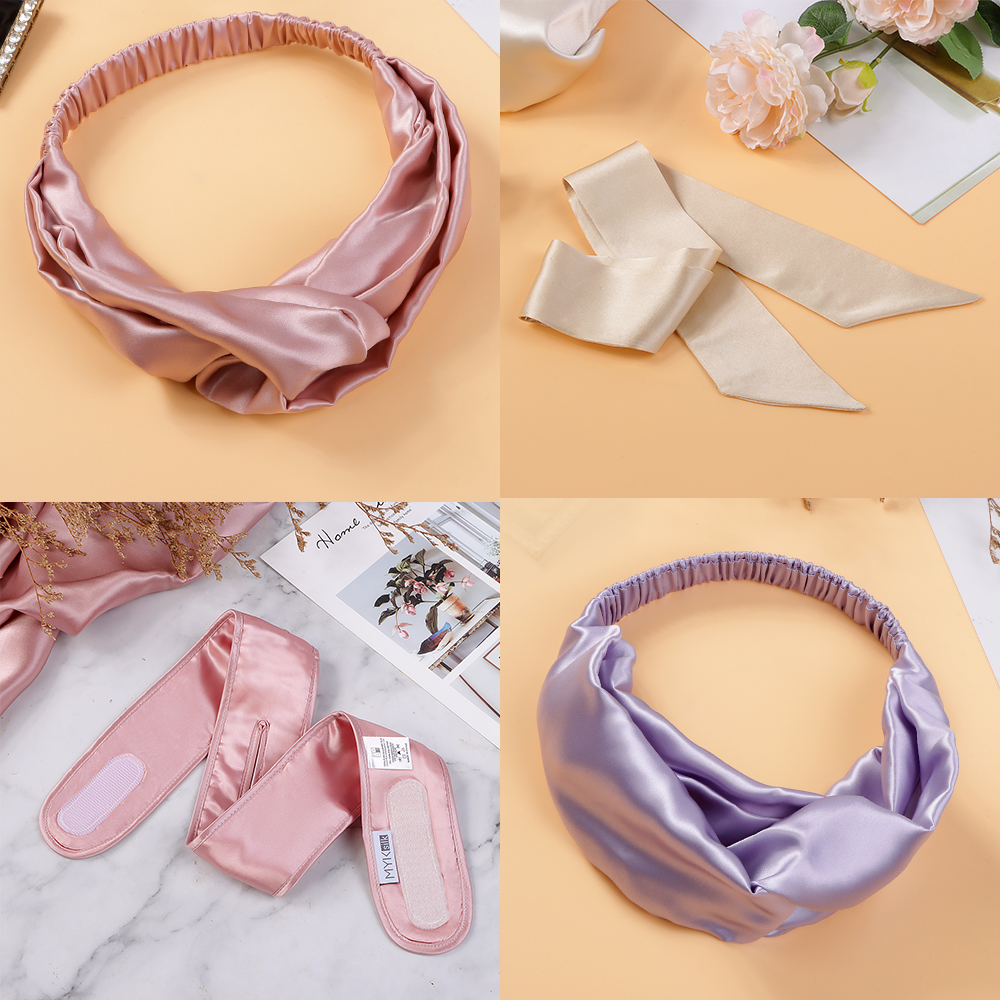
At MYK Silk, our products are crafted from 100% mulberry silk, honoring a tradition that spans five millennia. Every pillowcase, robe, and accessory carries the legacy of a civilization that understood, long before the rest of the world, that the finest things in life are not merely beautiful. They are meaningful.
This Lunar New Year, give a gift with 5,000 years of history behind it.
Sources
- Wikipedia: History of Silk
- Wikipedia: Silk Road
- Smithsonian Folklife Festival: The Silk Road: Connecting Peoples and Cultures
- UNESCO Silk Roads Programme: About the Silk Roads
- Encyclopaedia Britannica: Silk Road
- Google Arts & Culture / China National Silk Museum: The Story of Silk
- Asian Art Newspaper: A History of China in Silk
- Liu & Liu: The History and Cultural Significance of Silk
- Threading Change: Stitched in Tradition: Tales of Lunar New Year Attire
- LAT Multilingual: The History Behind Gifting Red Envelopes During Chinese New Year
- Country & Town House: What Gifts Are Traditionally Given During Lunar New Year?


Leave a comment
This site is protected by hCaptcha and the hCaptcha Privacy Policy and Terms of Service apply.